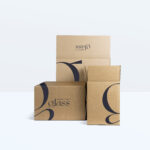
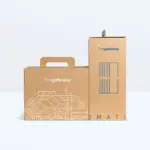
In modern e-commerce, where shipping costs and returns management have a significant impact on profit margins, packaging has evolved from being a simple container into a strategic asset. Often, online shop owners tend to prefer the classic corrugated box, convinced that it is the most economical solution. However, an in-depth technical analysis reveals that a custom die-cut box can reduce operating costs and generate value throughout the supply chain.
Fold-out box vs. die-cut box: a technical analysis
To optimize the supply chain, it is essential to understand when tradition must give way to packaging engineering:
- The American-style box (RSC 0201): This is the industry standard par excellence, characterized by its four flaps. Although it is cost-effective for high-volume B2B shipments, it has clear limitations in the B2C sector: it often does not fit the product’s dimensions, requires the use of plastic tape, and demands a significant amount of packing material, resulting in a fragmented unboxing experience.
- Die-cut boxes: the advanced solution for e-commerce. Thanks to their custom design, they conform to the shape of the product, eliminating the need for packing material. They can incorporate adhesive closure systems and easy-open strips, eliminating the need for tape and improving shipping security.
Eliminating hidden costs: Say goodbye to "wasted space"
The true cost of a box isn’t its purchase price, but its impact on logistics. Using a standard US-sized box to ship products of different sizes forces you to “ship air.” This results in higher shipping costs due to volumetric weight and increased risk of damage during transit.
The new European PPWR regulation mandates a drastic reduction in empty space, setting a maximum limit of 50%. Die-cut boxes naturally comply with this standard: by reducing external volume, they allow for increased load density on pallets and in delivery vans, drastically reducing CO2 emissions and transportation costs.
Operational efficiency and packaging speed
In an e-commerce warehouse, time is a critical resource. A self-assembling die-cut box reduces assembly time: workers no longer have to deal with the “matryoshka” effect or waste time filling gaps with bubble wrap or styrofoam. Fewer manual steps mean faster, smoother order fulfillment that is less prone to packaging errors.
The structural strength of die-cut cardboard, determined through laboratory tests such asthe ECT (Edge Crush Test) in accordance with the parameters of the ACIS Manual, ensures that the box maintains its integrity even under pressure, protecting the contents without the need for additional plastic packaging.
Customer Experience and Eco-Design: The Value of the First Interaction
The packaging is the only physical point of contact between the brand and the end customer. A well-designed unboxing experience—where the box opens with a smooth motion and presents the product in an orderly manner—instantly increases the perceived value of the purchase.
At Salco, we promote the One-Box concept: a single, single-material package that serves both as technical protection and as a marketing tool. This eco-design approach eliminates overpackaging, facilitates full paper recycling, and perfectly meets today’s consumers’ growing demands for sustainability.
Salco: Your Partner in Logistics Transition
Salco is a strategic partner that guides you in evolving your packaging. With fifty years of experience, we transform cardboard into a tool for supply chain efficiency, designing customized solutions that reduce hidden costs, minimize shipping damage, and lower your company’s carbon footprint.
Are you still paying to ship empty space? Don’t let inadequate packaging eat into your profits. Contact us today for a technical consultation.