No e-commerce business wants to see its margins eroded by unexpected shipping costs, such as a surcharge for bulky packages, or—worse still—to see an investment in customer acquisition go to waste because a product arrived damaged. Yet both of these risks often hinge on a single decision: the choice of packaging.
The packaging is a strategic lever that affects cost to serve, transport safety, and, crucially, the only physical experience the customer will have with the brand.
As a partner to e-commerce companies, the Salco team has summarized this decision-making process into five key steps. This is a strategic guide designed for entrepreneurs, marketing professionals, and managers who want to transform their packaging from a cost into a valuable asset.
1. We start by analyzing the product’s dimensions, weight, and fragility
For a packaging project analyzing the product is the data collection phase that defines the entire technical specifications specifications and prevents costly errors.
- Dimensions and footprint: the goal is product density. Measure your products accurately to design a box that eliminates "wasted space." Less empty space means fewer fillers (a direct cost) and more compact shipments, which reduce volumetric weight—a direct cost to you.
- Weight: The weight of the product determines the required structure. Lightweight items (e.g., T-shirts, cosmetics) can be shipped using high-performance single-wall packaging. However, for heavy products (such as wine bottles, jars, oil cans, electronics), double- or triple-wall packaging, along with internal compartments and protective inserts, is essential. Damage to packaging during transit results in direct return costs and also impacts the brand’s image.
- Fragility: Fragile products (glass, ceramics, lighting, electronic components) require an engineering approach. Packaging alone is not enough. Shock-absorbing and securing solutions are needed, such as internal honeycomb structures or die-cut inserts, designed to counteract the stresses of shipping via couriers.
2. There isn’t just one type of box: the most common types for e-commerce
Once the technical requirements have been defined, the next step is to match the product with the right packaging solution. Efficiency is achieved by choosing the right solution for the right job.
- American box: this is the industry standard, the most common and versatile solution (the classic box with four flaps). It is the top choice when seeking the best balance between logistics efficiency and unit cost, ideal for sturdy products and high-turnover inventory flows.
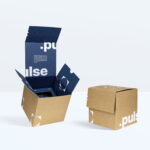
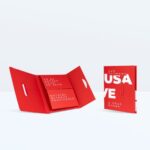
- Die-cut box: Die-cut packaging is designed using a specific template (the die) and offers the opportunity forpremium look, a practical closure and secure and optimized protection. The die-cut box is specifically designed to combine engineered protection and design in e-commerce.
- Envelopes and flat parcels: You don't always need a box. For small or non-fragile items (clothing, books, accessories), envelopes made of kraft paper, stiff cardboard, or padded material reduce volume, speed up packaging, and have a significantly lower logistical and environmental impact.
3. Beyond Protection: The Box as a Primary Marketing Tool
While the first two points help optimize costs, this one builds value. Your package is the first (and often only) physical point of contact between your brand and the customer. It’s a marketing opportunity that should be leveraged strategically.
- Unboxing: In e-commerce, unboxing is equivalent to theshopping experience in a physical store. A well-designed box that opens easily (perhaps with a tear-off strip), looks good, and protects the contents conveys care and professionalism. This transforms a simple purchase into a memorable moment, generating positive reviews, spontaneous social media content (UGC), and ultimately impacting customer lifetime value.
- Customization: logo printing, graphics aligned with your visual identity, a thank-you message inside—these are the details that turn a shipment into a brand experience and set you apart from your competitors. Find out how Salco can help you customize your e-commerce packaging in our dedicated article.
4. The sustainable choice: materials, recycling, and the "One-Box" concept
Today, customers (especially Millennials and Gen Z) buy products not only for their features but also for the values a brand embodies. In this list, we explain what really makes a difference when it comes to sustainability.
- Materials and Recycling: Choosing cardboard is just the starting point. But is it recycled cardboard? Is it FSC®-certified, ensuring a responsible supply chain? Are the printing inks water-based? The goal must be 100% single-material packaging that is easily disposed of by the end customer, without any doubts or complications.
- Optimization (waste reduction): True sustainability lies in efficiency, even more so than in recycling. The number one enemy of e-commerce is overpackaging: the infamous “box within a box” that frustrates customers and drives up costs. The most innovative approach is to adopt a “One-Box” solution: a single smart package that serves as both product packaging and shipping box. This choice cuts material costs, optimizes logistics, and drastically reduces environmental impact. We recommend reading our in-depth article on eco-design and the Gravitino One-Box solution.
5. Final Checklist: 5 Questions to Ask Yourself Before Choosing Packaging
Let’s summarize the points covered in a checklist. Before approving packaging, these are the key questions to answer:
- The dimensions are optimized for product density or am I paying to transport air?
- Is the packaging (corrugation, weight) designed to withstand the weight of my product and the stresses of shipping?
- Is the box merely a functional item, or is it a marketing asset that communicates my brand?
- Is this a sustainable choice (in terms of materials and recycling) that my customers will appreciate?
- Am I overpackaging, or can I implement a more efficient solution using packaging sizes that are better suited to the products or "One-Box" solutions?
As we have seen, a simple box is actually a strategic investment that bridges logistics, marketing, and sustainability. Optimizing it means directly improving operational efficiency (costs), brand perception (value), and environmental impact (responsibility).
If you found this guide helpful but would like our support for your project, we’re here to discuss it with you.
Contact us for more information